
DoorList · Product design · Consumer social

Turning event attendance into a social network.

DoorList gives college students a place to discover events, make plans and see where their friends are going.

The opportunity

Give students a reason to return after the RSVP.

Events gave students a reason to join DoorList, but many treated the product transactionally: open an invitation, RSVP, disappear. Friends Activity explored how the network itself could become a reason to return.

My role
I owned the feature from early product definition through interaction and UI design.
Core question
Should users have to build a network before they can experience its value?
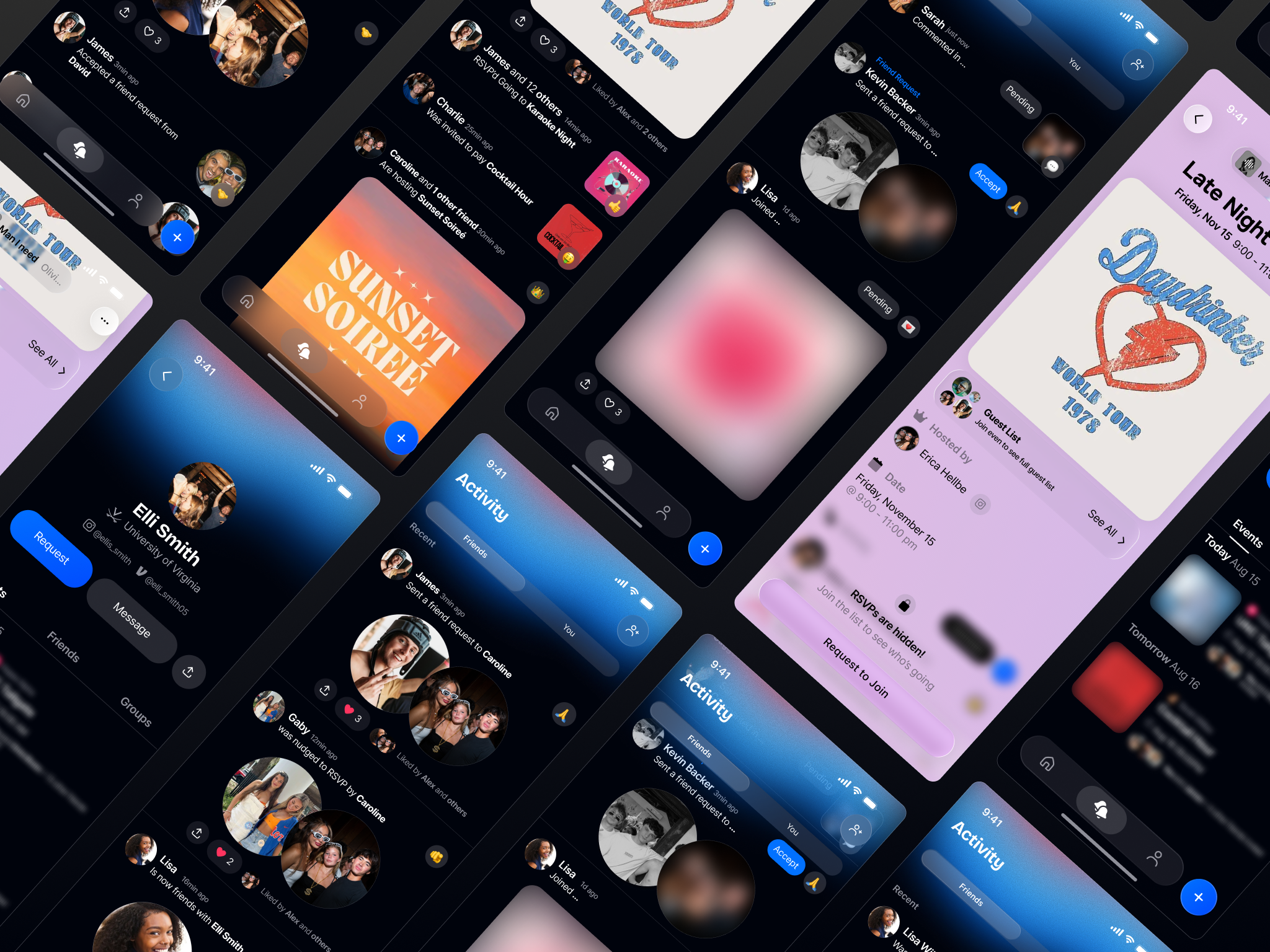
DoorList Friends Activity feed and suggested social connections
Exploring activity types, discovery, onboarding and the empty-network experience.

The pivotal decision

Gate the feed, or let the feed prove its own value?

A minimum-friend gate sounded like a clean growth mechanic. It also created a chicken-and-egg problem: users with the weakest networks had to invest before they could see why a network mattered.

“Show people the value of the network before asking them to build it.”
Ungated DoorList Friends Activity feed
DoorList Friends Activity gated until three friends are added
We compared an open Friends Activity experience with a three-friend gate.

What changed

The open experience produced more friend additions than the gated variants.

The test window was limited, but the signal was strong enough to challenge the original assumption and move forward without the gate. Friends-of-friends activity could create curiosity without turning access into a demand.

Next projectPilot